In a process that started on 16th January 2026 in office of the acting UHS Direct, Dr Samson Miyoro, RaHa and UHS are agreeing on how to give free services of medical doctors and specialists to UoN Community members. This is to contribute toward making individuals in the community to feel more safe and relaxed. More low-stress lifestyle will enhance creativity, making UoN community one of the most innovative in the world.

“…To feel safe is one of our primal needs and if we’re not safe, we’re not able to relax into co-creation and innovation,” explains Elisabet Lahti, PhD, applied psychology researcher, author of Gentle Power, and founder of Sisu Lab.

UoN community members will not register, queue nor be nominated for the services. Even when the members will be away on holiday (off-session) during which they are currently not eligible to access healthcare at UHS as per the university policy, they will access the free services on their phones, which they don’t have to buy data bundles for — one does not need to buy data bundles for the free services.

The RaHa-UHS healthcare system guarantees that all UoN community members have access to necessary outpatient medical services, with every member receiving free outpatient healthcare, and psychological support. RaHa and UHS will provide regular public updates on the services so that people know that if something happens to them, the system will take care of them — this will create a sense of safety and belonging.

This (RaHa-UHS system) is like Finland’s social systems, which is built on the idea that everyone deserves access to free services of medical doctors and specialists — the Finnish healthcare system guarantees that all residents have access to necessary medical services. It has a highly decentralised publicly funded healthcare system and only a very small private health sector. This is far more effective and efficient than some alternatives used in other countries. a health service with waiting times that are the envy of the world.

This is partly why Finland consistently ranks as the happiest country in he UN World Happiness Report. Finland’s happiness (low-stress lifestyle) nurtures creativity, making it one of the most innovative countries in the world.
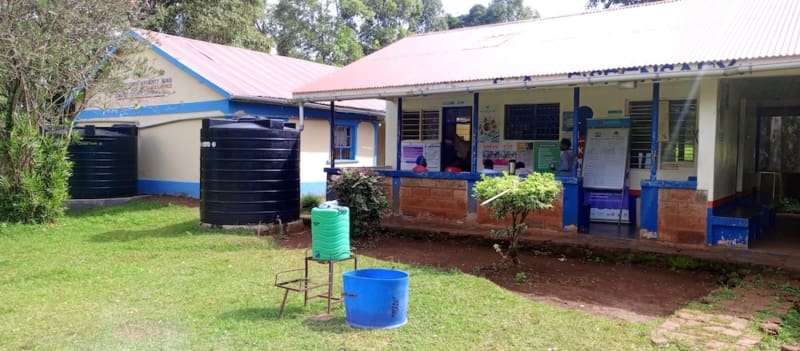
Wire SDA Dispensary

Hanington Ouma Omondi is happy to announce that Wire SDA Dispensary, a Level 2 facility, starts to provide free medical services with support from accelerateUHC, a project coordinated by RaHa Solutions.

The In-charge added the following: “A faith based facility with a community unit with a population of over 10,000”

The free services are supported by RaHa Solutions, please click to see details.

Marie Medicenter

Arnold Ouko Akumu is happy to announce that Marpe Medicentre, a Level 3 facility, starts to provide free medical services with support from accelerateUHC, a project coordinated by RaHa Solutions.

The Registered Clinical Officer added the following: “I am a competent clinical officer with a 6 year work experience and working with Marpe enables me to help the community by identifying, diagnosing and treating and preventing communicable and non-communicable diseases

The free services are supported by RaHa Solutions, please click to see details.


From 7th to 11th October 2024 in PrideInn Paradise Beach Resort, KCCB – CHDK had their this year’s annual health conference themed Transformative Health Financing Reforms Towards UHC: Strategic Positioning of Faith Based Health Facilities.

About 500 people attended this conference. KCCB, through CHDK provides oversight; coordinates, represents, undertakes lobbying and advocacy; and builds the capacity of Catholic health services and network. Today, this network of health services is expansive comprising of 497 levels 2 – 6 health facilities, over 50 community health programmes and 22 medical training colleges spread across Kenya in the 26 Arch/Dioceses.

To deliver on its mandate, the KCCB – CHDK hosts an annual forum that brings together the managers of all the Catholic health institutions and Arch/Diocesan Health Coordinators who undertake regional coordination of Catholic health services.

While the main objective of this forum is to strengthen the Church’s coordination structure to optimize the health Apostolate, it also provides a platform for experiences sharing and peer to peer learning. It further provides a great opportunity to reflect how the Church links to and responds to national and international priorities, emerging health issues and the subsequent realignment of the health sector strategy and priorities.

Focusing on how to work without NHIF/SHIF, attendees thought of coming up with a social health insurance that would be more reliable. ‘This is not acceptable’, said Rt. Rev. Norman Wambua King’oo, in reaction to NHIF’s inability to pay for Catholic health services that have already been delivered. Representative of Caritas Microfinance Bank even hinted that their social health insurance service or product is coming soon.

Based on the inability, KCCB-CHDK should ask Government of Kenya to not only allow KCCB-CHDK to form a health social insurance, but to also assist in doing so. NHIF/SHIF may be more efficient if a competing social health insurance came up.

Since discussions with governments take long, KCCB-CHDK should urgently start working with private businesses. acceleraeUHC requested the managers to ‘…get community health workers (CHWs) in your health facilities to provide medical services to households per our most ambitious plan (attached)… –– more households will start getting free medical services, CHWs will get per-service stipends and the facilities will provide related medical consultation, tests and or medicine at our cost per the plan…’

In an interview with The New York Times, French Gates was asked what she thinks about the approach to philanthropy shown by the new generation of “billionaire activists” — like Tesla CEO Elon Musk, Twitter founder Jack Dorsey, hedge fund manager Bill Ackman, and PayPal founder Peter Thiel.

“Well, the people you just named have not been very philanthropic yet,” French Gates replied. “They use their voice and they use their megaphones, but I would not call those men philanthropists.”

“..But go look at their record of actually giving money to society. It’s not big,” she added with a laugh.

Gift size is secondary, though.

First, a giving, or a gift, a pure gift, is that which is not annulled by what would be called a counter gift, the gift has to be sent in such a way that it does not come back immediately, even though we are brought up in the space where we say ‘thank you’ immediately upon receiving gift — and, as soon as we say ‘thank you’, we give back huge part of the whole gift.

Therefore, in order for a giving to occur, ‘I’ must not be the one to give. A gift has to be like grace, it has to fall from the sky. If there are traces of origin of the gift, there is no gift — there is an ‘I’ give, which also signifies: say ‘thank you’, even if ‘I’ don’t ask the other to say it.

When then, do I give? I give when ‘I’ accede to transparency (as in clear water) but without disappearance, because otherwise it would be a Devine gift.

The gift has to arrive at its destination. For where there is a gift, there has to be reception — the reception has to be equal to the gift, there has to be an equal generosity of reception, (the given must truly be in need of the gift and they must generously accept the gift).

So giving is quite rare, is it not?

This is list of medicine that we are currently want to be part of our free medical services.

Recognizing the difficulties experienced by visually impaired individuals in accessing healthcare, HealthX Africa in collaboration with accelerateUHC and the Kenya Union of the Blind are actively stepping in to onboard and provide comprehensive healthcare support to members of the Kirinyaga Branch using HealthX Africa’s telehealth services.

People living with disabilities in Kenya confront significant challenges in accessing healthcare. The 2019 census reveals that 2.2% of Kenyans live with disabilities, with mobility disabilities comprising 28.6% of this group. Visual, hearing, and communication-related impairments disproportionately affect women (57.5%) and those in rural areas (80%). While Kenya has established robust policy frameworks to address health equity disparities, translating these policies into tangible solutions remains challenging.

Shockingly, one in two people with disabilities cannot access healthcare, leading to a disease burden nearly 10% higher than the general population.

These statistics were recently brought to life during a needs assessment done by the Kenya Union for the Blind. It was discovered that members of the Kirinyaga Branch encounter obstacles in movement, leading to higher logistics costs and delays in seeking healthcare. Many members require guides to attend hospitals, and when guides are unavailable, some choose to postpone healthcare visits.

“For Kenya to achieve universal health coverage we must cater to individuals that have traditionally been excluded from the healthcare landscape,” HealthX Africa’s CEO, Roy Bore said, “Using digital innovations like telehealth will allow us to be a step closer in making inclusive healthcare a reality.”

Recognizing the transformative potential of telehealth in achieving universal health coverage, HealthX with accelerateUHC, a project of RaHa Solutions, Kenya Medical Research Institute (KEMRI), and others, has committed to providing telehealth services to this community. HealthX Africa emphasizes the importance of leveraging technology to create an inclusive and equitable healthcare system. Telemedicine has proven globally to reduce costs, enhance access to providers, and mitigate barriers such as transportation expenses, especially crucial during pandemics.

With this premise, the Kenya Union of the Blind, Kirinyaga Branch members, will have access to comprehensive telehealth services that will encompass unlimited virtual doctor consultations, nutrition counseling, and counseling psychology through the toll-free number. Furthermore, the County government of Kirinyaga has pledged to assist the people with disability with the Governor H.E Anne Waiguru declaring her commitment to promoting diversity, equity, and inclusivity to ensure no part of the society is left behind.

“It is our priority to ensure that Universal health coverage is a reality for all Kenyans, and this project is the first step in creating an inclusive healthcare system,” said accelerateUHC’s Liason person, Kadu Titi.

HealthX Africa is intentional in working with and learning from organizations representing and advocating for the health and rights of people with disabilities and adapting and improving HealthX telemedicine systems and services to meet the needs and preferences of Kenyans living with different disabilities.

John Muriuki, the Chairperson of the Kenya Union of the Blind, appreciated the medical support, saying this is an opportunity given to them to be able to access primary healthcare, especially through their phone. He said: “As a community, we face many challenges. When visiting the hospital, someone has to take you, thus making it difficult for your privacy and mental wellness, with a guide who is probably your relative sitting next to you in some instances. If the guide is not available, we do not go to the hospital. The possibility of accessing a doctor through our own phones without having to buy airtime is the surest way of ensuring universal access to health support. I request accelerateUHC to extend support to all the members of the Kirinyaga Branch, who are 327 members with visual impairments. We appreciate the support of 50 members, but I am appealing for your support to cover all the members. We also request your support for medicine, which will go a long way in ensuring easy and equal access to health”.

“HealthX has given people a medical access card with security features that will be used by people with visual challenges,” Muriuki added.

Through toll free calls, the visually handicapped have also started to get free medical services, which include prescribed medicine.

Please crowd point (add points) for them HERE — once the services start, they continue for as long as crowd pointing continues.

#accelerateUHC 

If, during your insurance selling activities, you encounter families that cannot afford your micro insurance medical cover, would you please nominate them HERE for free medical services/cover. We will buy the cover from you on behalf of those that you nominate.

In a project/programme called accelerateUHC, we [RaHaSolutions, Kenya Medical Research Institute (KEMRI), SASADoctors, CheckUp Meds, HealthX & others] accelerateUHC by giving free medical services to families that are excluded from quality health care coverage — for OP, we buy subscriptions from Virtual Hospitals on behalf of the families; and, for IP, we buy medical cover insurance policies on behalf of the families.

Until now, nomination was done almost exclusively by community health workers, see details below.